An Argentina Map benefits from a portrait page because the country extends much farther north to south than east to west. A wide regional map can make the southern provinces look compressed, while this tall frame keeps Jujuy and Tierra del Fuego visible on the same page. The collection uses that geometry for an unlabelled outline, a black-and-white provincial reference, and a color administrative view.
All three previews measure 1200 × 1697 pixels and share the same boundary network. The download is described as a high-resolution A3 collection with JPG and PNG files in a ZIP archive. Teachers, students, designers, bloggers, and presentation creators can therefore move between versions without changing the relative placement of the provinces.
The maps are designed around first-level political divisions, not roads or physical terrain. They show 23 provincial shapes and, in the labeled editions, use a star near the Río de la Plata for the national capital. Argentina officially has 23 provinces plus the Autonomous City of Buenos Aires, so the star represents the capital rather than a twenty-fourth province and is distinct from the much larger Buenos Aires Province.
Table of Contents
Reading the Argentina Map from North to South
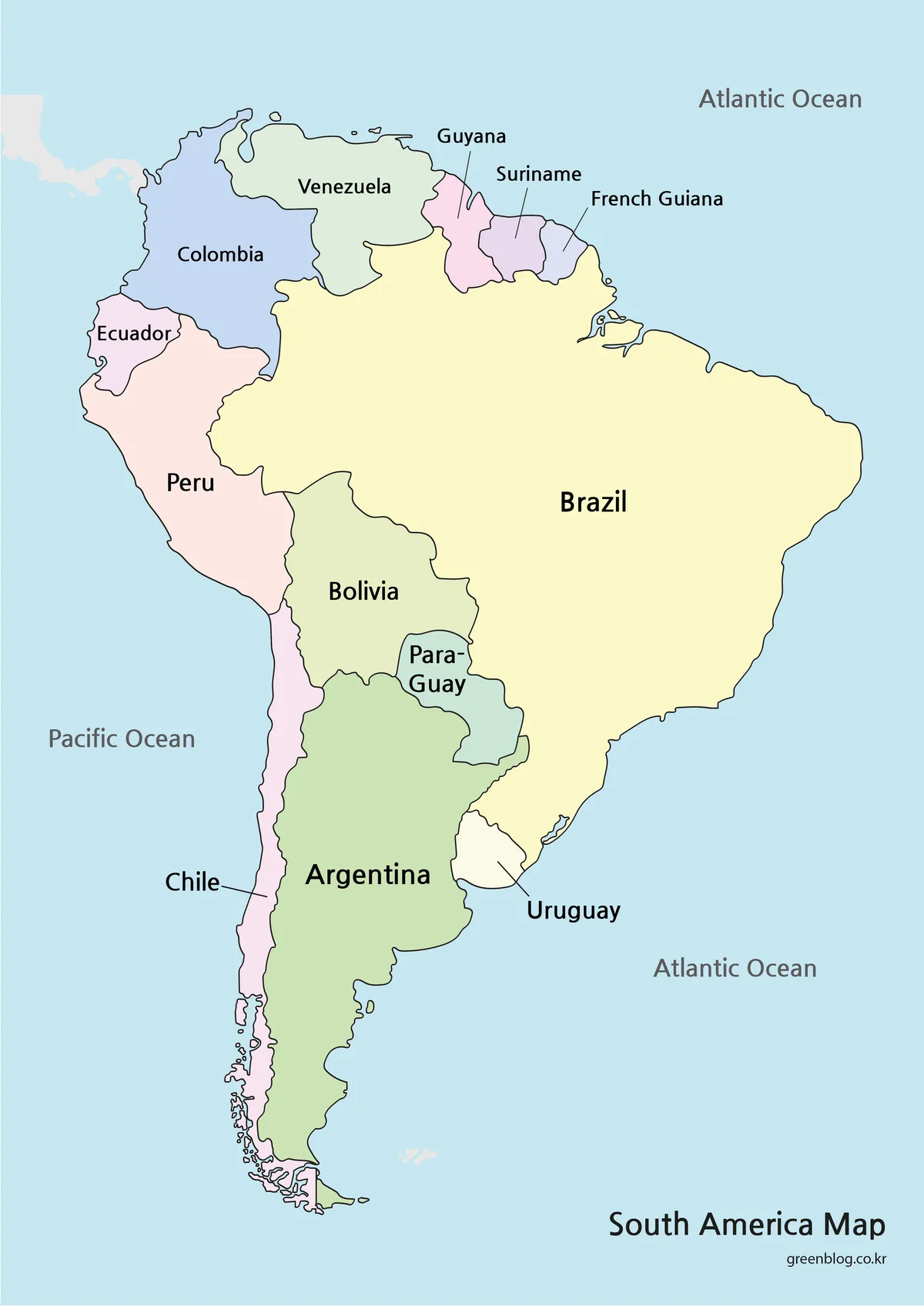
Argentina occupies the southern portion of South America. Chile follows nearly the entire western side, Bolivia and Paraguay lie to the north, and Brazil and Uruguay meet the northeastern edge. The Atlantic opens along the east. Neighboring land is shown in pale gray but is not named, so the image itself provides only limited continental context.
The north contains the densest cluster of small and medium-sized provinces. Jujuy and Salta anchor the northwest; Formosa, Chaco, Corrientes, and Misiones extend across the northeast; and Tucumán, Catamarca, La Rioja, Santiago del Estero, and San Juan occupy narrower interior or western positions. Leader lines are needed where a name would otherwise cover a small polygon.
Córdoba, Santa Fe, Entre Ríos, San Luis, Mendoza, Buenos Aires, and La Pampa create a broad central transition. Buenos Aires Province is visually dominant on the eastern side, while Mendoza forms a large western block beside Chile. The capital star sits near the northeastern edge of Buenos Aires Province, indicating the separate city rather than the provincial capital of La Plata.
Patagonia gives the Argentina Map its extended lower half. Neuquén and Río Negro begin the southern sequence, followed by Chubut and Santa Cruz, with Tierra del Fuego separated at the bottom. The portrait composition protects that sequence from being squeezed into a small corner and makes the contrast between the crowded north and expansive south easier to teach.
Administrative Structure Shown on the Maps
Argentina’s official first-level structure consists of 24 jurisdictions: 23 provinces and the Autonomous City of Buenos Aires, commonly abbreviated CABA. The maps draw the 23 provinces as bounded areas. CABA is too small to appear as a province-sized polygon at this national scale, so the labeled maps use a star to orient the reader.
Buenos Aires Province and the Autonomous City of Buenos Aires are legally and geographically distinct. The large province labeled “Buenos Aires” surrounds much of the capital region but has La Plata as its provincial capital. A complete comparison of all first-level jurisdictions treats CABA separately even though this artwork does not outline it as a clearly readable area.
The files do not show departments, partidos, municipalities, provincial capitals, highways, rivers, mountain relief, or statistical regions. Terms such as Patagonia, Cuyo, the Pampas, Northwest, and Northeast can be added as learning overlays, but they are not printed boundaries in these images. Province-level data fit the mapped polygons; finer geographic data require a more detailed base.
The offshore label reads “Falkland Island” in the image, while common English usage is “Falkland Islands” and Argentina uses Islas Malvinas. Sovereignty is disputed between Argentina and the United Kingdom. Their appearance supplies South Atlantic context and does not make them one of the 23 provincial polygons or settle the dispute. Antarctica is outside the image extent.
Three Printable Map Versions
The collection begins with the blank outline, then adds names in the monochrome edition, and finishes with color. This order works naturally for editing, reference, and presentation. Shared borders let a teacher create an answer key from the labeled map or allow a designer to transfer the same highlight from one version to another.
- Outline: national and provincial boundaries without place names or a capital marker.
- Black and white: 23 province names, the Buenos Aires star, ocean text, and offshore island label.
- Color: the same labels and boundaries with contrasting provincial fills and blue water.
Several printed names omit Spanish diacritics: Tucumán appears as “Tucuman,” Córdoba as “Cordoba,” Neuquén as “Neuquen,” and Río Negro as “Rio Negro.” “Tierra Del Fuego” also uses different capitalization from the standard Tierra del Fuego. The printed spellings are a limitation of the artwork, while explanatory text can use the accented official names.
Blank Outline Map for Editing
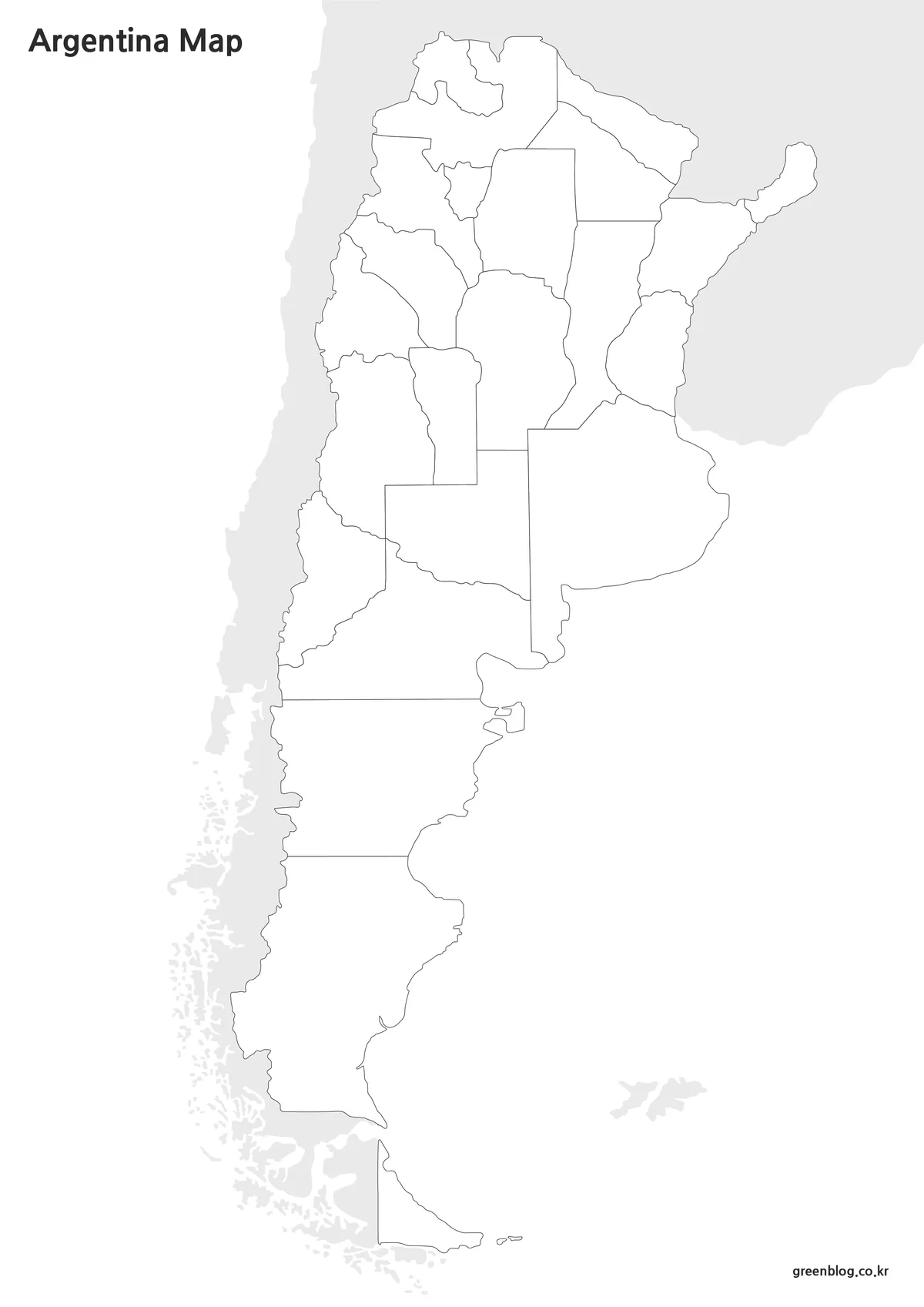
The first Argentina Map removes province names, ocean text, the capital star, and provincial colors. Fine black lines preserve the national and internal boundary pattern, while nearby land remains pale gray. The offshore islands appear only as a faint contextual shape, leaving the main country open for labels and thematic fills.
Students can write the 23 province names, number a north-to-south sequence, or color broader study regions according to a separate key. Designers can add symbols, arrows, and a custom legend without covering existing text. Because CABA is not visibly separated at this scale, exercises covering all 24 jurisdictions need a clear inset or marker.
Black-and-White Labeled Map
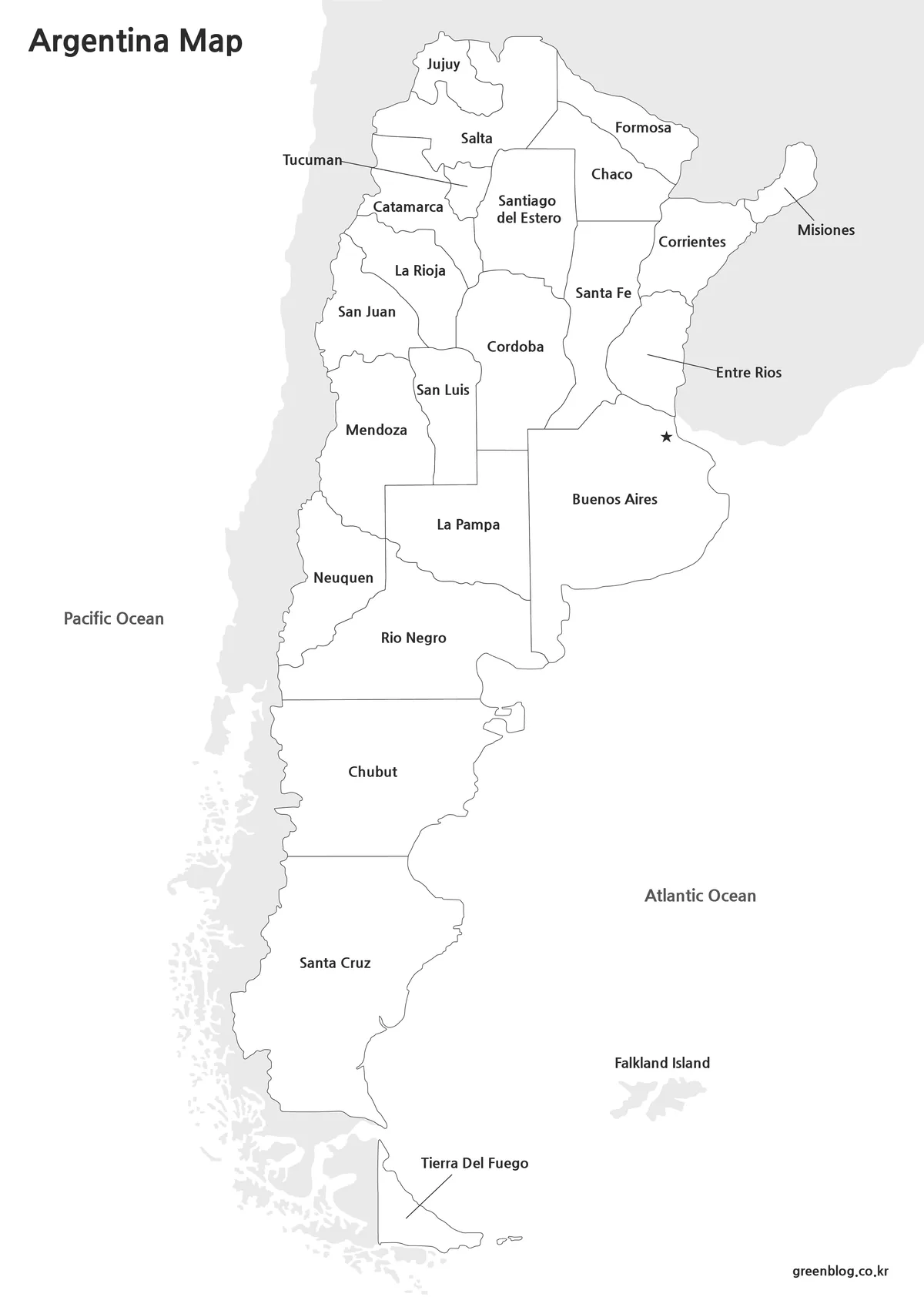
The monochrome Argentina Map keeps province interiors white and places names directly inside larger areas. Leader lines handle compact jurisdictions such as Tucumán, Misiones, and Entre Ríos, while the Buenos Aires star remains visible near the Atlantic side. Ocean labels and the offshore island name provide regional orientation without requiring colored water.
This edition is useful for an answer sheet, report insert, low-ink handout, or note-taking page. Readers can underline provinces, draw a regional grouping, or compare the northern cluster with Patagonia while the names remain available. It is less suitable for a memory test because the answers are already printed.
Color Administrative Map
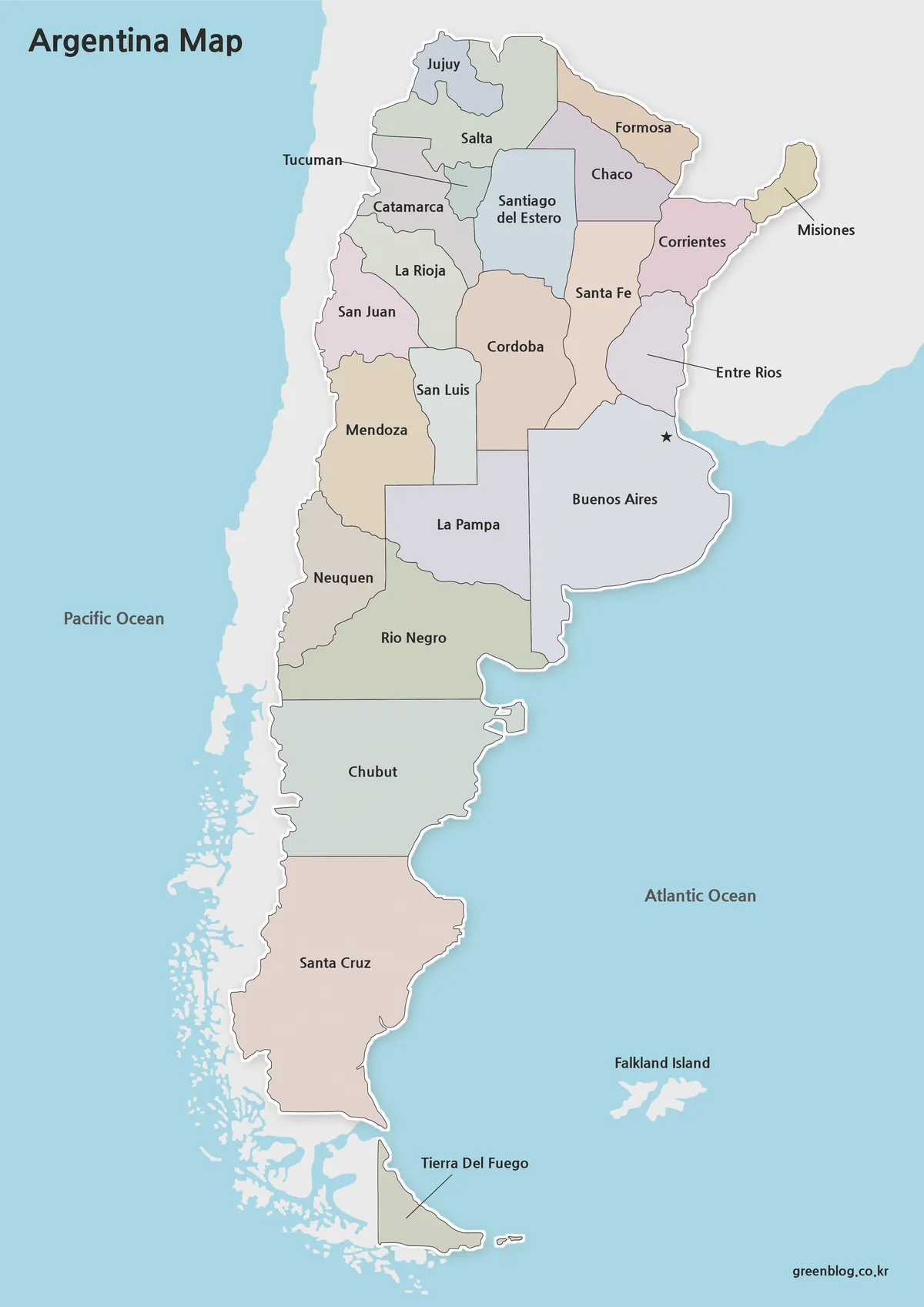
The color Argentina Map gives neighboring provinces different muted fills, which is especially helpful in the tight northern and central clusters. Blue water separates the oceans from pale gray surrounding land, and a white edge with a soft shadow lifts the country from the background. Black labels remain readable over the low-saturation palette.
Color is categorical here, not thematic. No legend associates the fills with population, climate, political affiliation, economy, or elevation. The existing palette serves only to distinguish adjacent provinces. New thematic data need their own sourced legend so the decorative fills are not mistaken for measurements.
Choosing the Right Version for Your Project
The outline version suits labeling or category exercises, black and white suits economical printing with names intact, and color helps viewers distinguish neighboring provinces quickly.
A lesson can begin with the labeled Argentina Map, move to color for regional comparison, and finish with the blank version as an assessment. An infographic workflow might start with the outline, apply one verified dataset, and use the labeled map only as a spelling and placement reference. Separate analysis of CABA requires an explicit marker or inset.
Province-level values fit the 23 polygons, while city, department, partido, and municipality values require finer geography. The images contain neither a road network nor elevation, making them unsuitable for navigation or physical-geography measurement.
Designed for Printing, Presentations, and Editing
The Argentina Map portrait orientation suits A3 paper because it gives the Patagonian sequence space without making the north unnecessarily wide. The original download preserves more detail than a screenshot, and portrait printing with proportional “fit to page” scaling maintains the intended shape. Sideways stretching makes Argentina appear broader and changes the visual relationship among provinces.
These files support ordinary raster annotation, cropping, highlighting, and layout work. They do not support precise coordinate extraction, surveying, legal boundary interpretation, or scale-based distance calculations. Those tasks require current authoritative geospatial data from Argentina’s national geographic institutions.
Frequently Asked Questions
How many provinces appear on the maps?
All 23 Argentine provinces are represented. The Autonomous City of Buenos Aires is a separate federal jurisdiction and is indicated by the capital marker rather than shown as another large provincial area.
Which Argentina Map is best for classroom printing?
The black-and-white version keeps province names readable, while the blank outline version suits exercises in which students label or color the provinces themselves. Both avoid the full blue background used by the color map.
Can I edit and recolor the blank map?
Yes. The outline version is prepared for ordinary raster editing, highlighting, annotation, and coloring. It is not an SVG or layered vector file, so province boundaries are not supplied as individually selectable paths.
Does the collection show cities, roads, or physical terrain?
No. Buenos Aires is marked as the national capital, but other cities, highways, airports, rivers, elevations, and detailed terrain are not included in the maps. Their main purpose is province-level visual reference.
Why are the Falkland Islands shown offshore?
They provide South Atlantic geographic context. The islands are not treated as one of the 23 provincial polygons, and their appearance on the page does not settle the sovereignty dispute.
Is Antarctica included?
No. The image extent ends south of Tierra del Fuego and does not include Antarctica. A dedicated polar or official bicontinental reference is appropriate for projects that require that wider extent.
Argentina Map Download Information
Map File Information
The archive groups three portrait maps for provincial reference, printing, labeling, and graphic annotation.
- Included Versions: Blank outline, black-and-white labeled, and color administrative maps
- Printable Size: High-resolution portrait A3 layout
- File Type: JPG and PNG image files in a ZIP archive
- Intended Use: Classroom handouts, presentations, document printing, blog graphics, and raster editing
Related Maps
Additional Resources
- Argentina Government: Provinces — The official page lists the 23 provinces and the Autonomous City of Buenos Aires as the country’s 24 first-level jurisdictions.
Green Map creates custom-edited map images using open geographic data sources such as geoBoundaries, Natural Earth, OpenStreetMap, and government open data.
These maps are edited visual materials, not raw data files, and are provided for education, documents, presentations, and graphic reference.