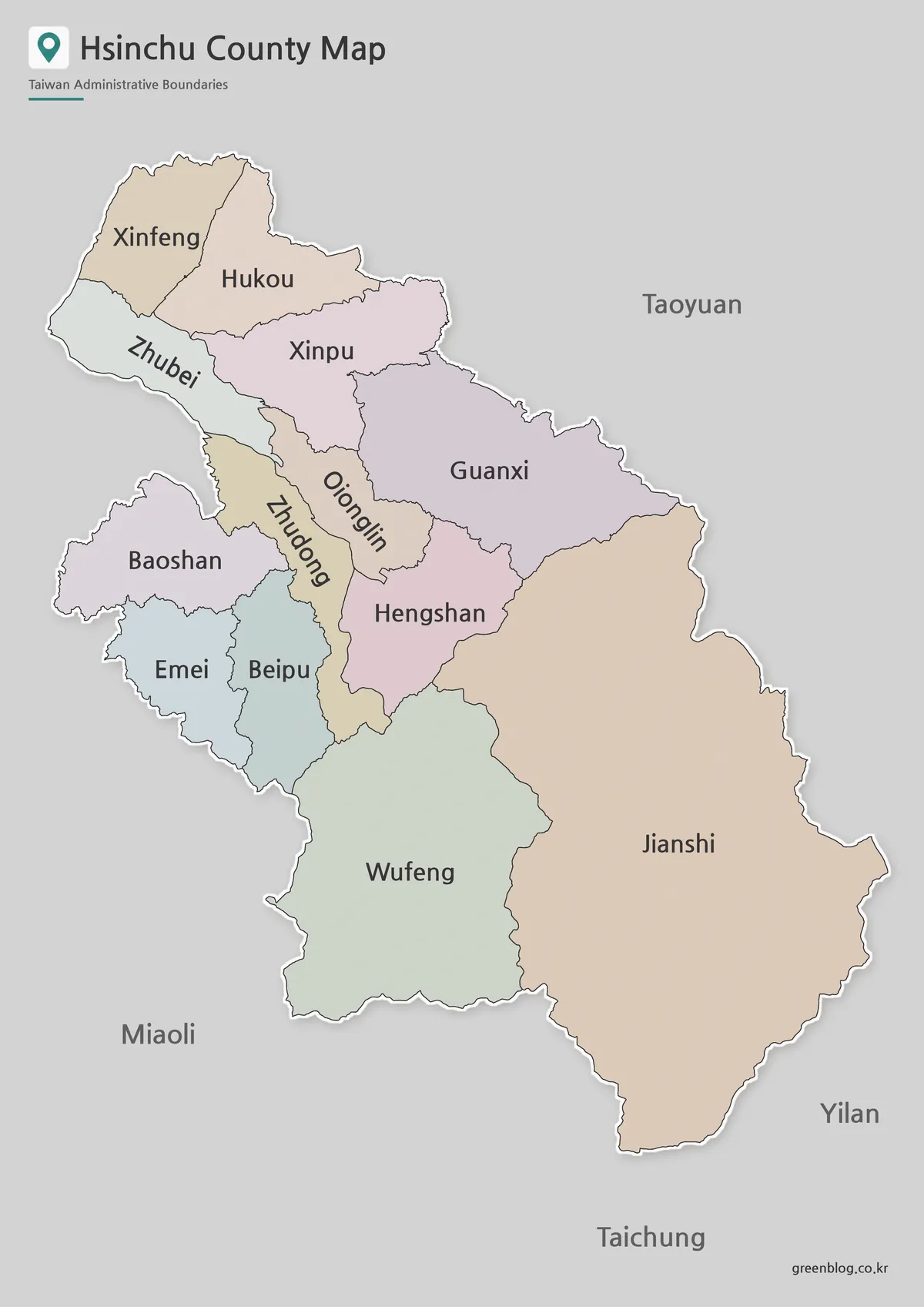
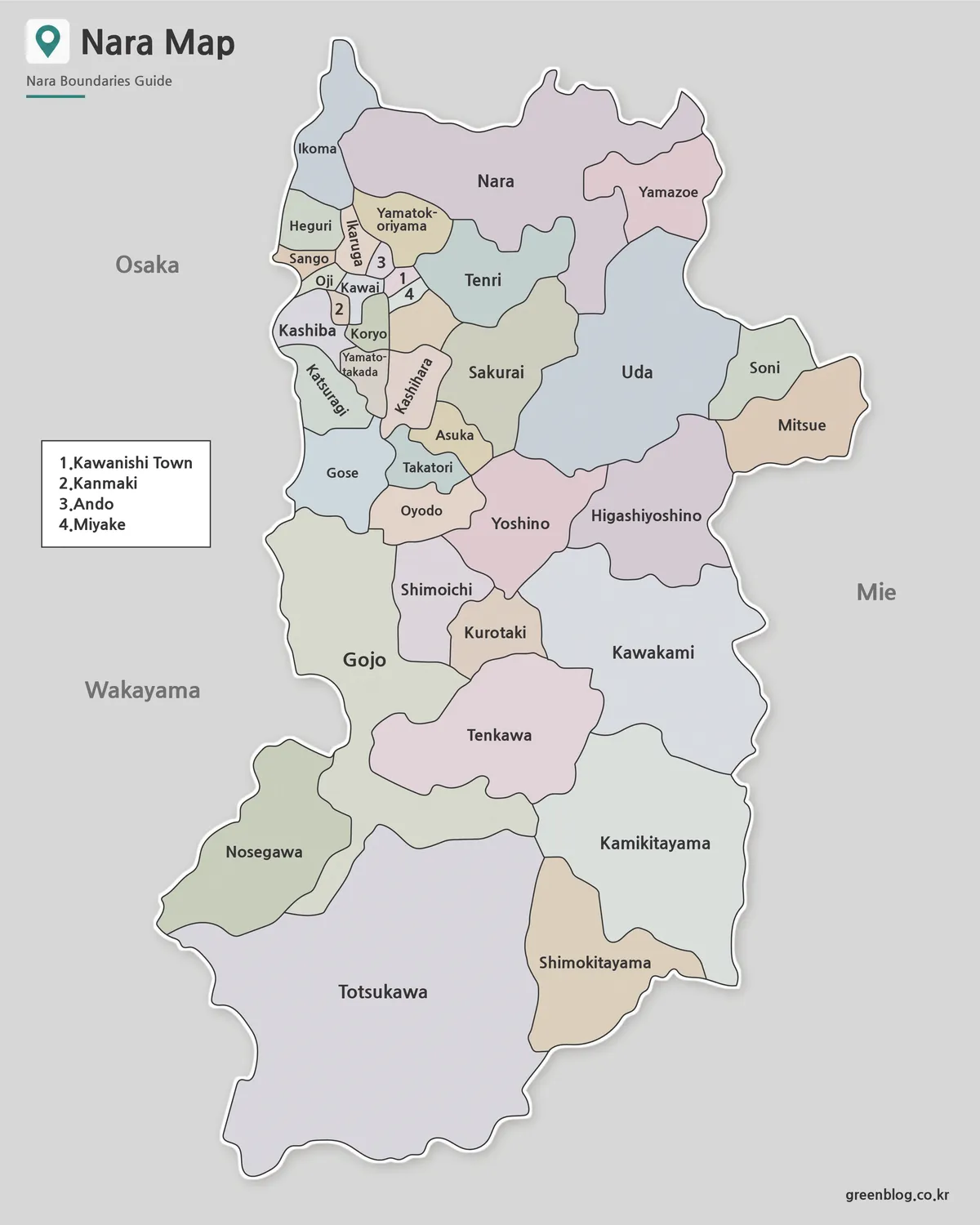
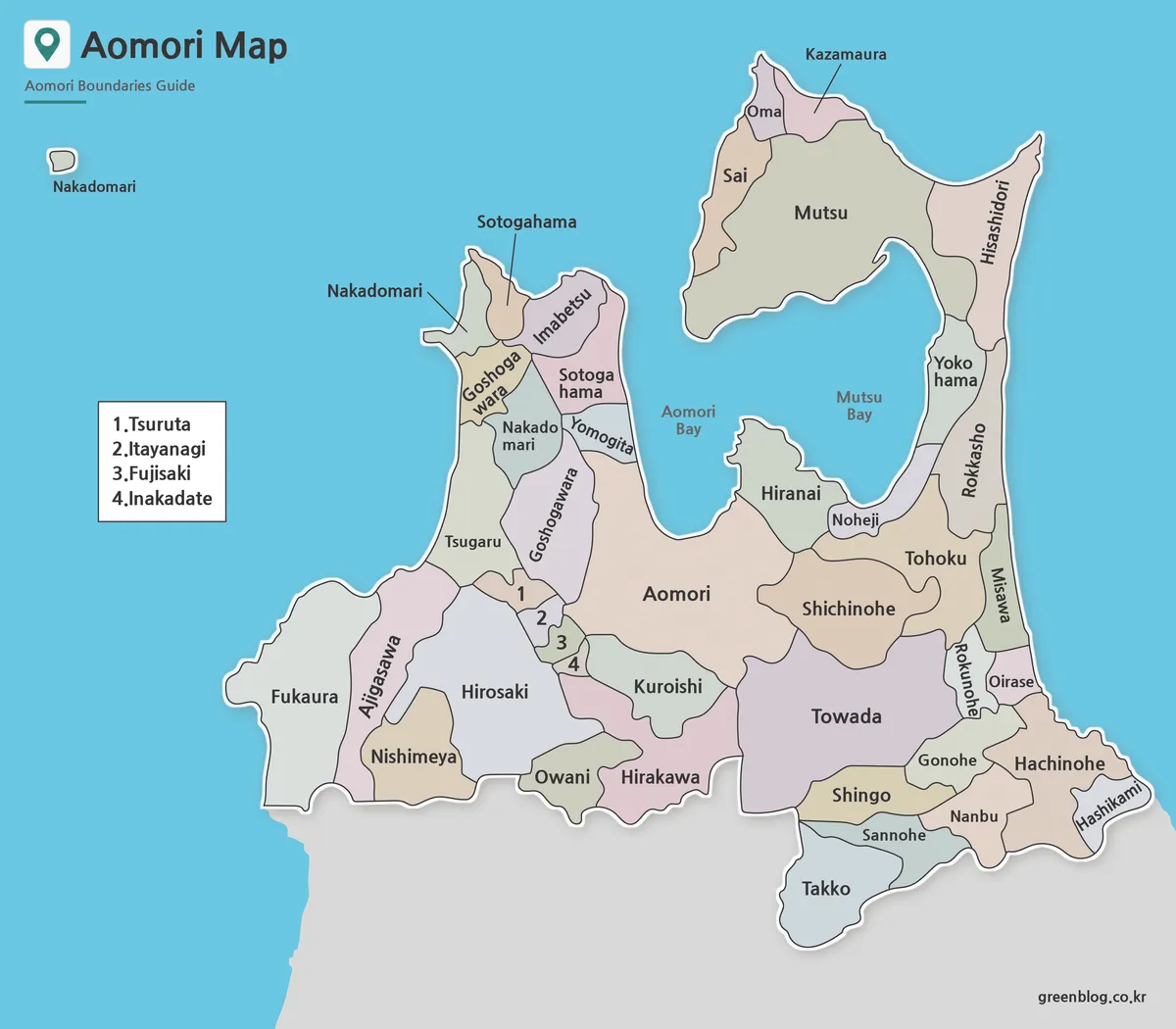
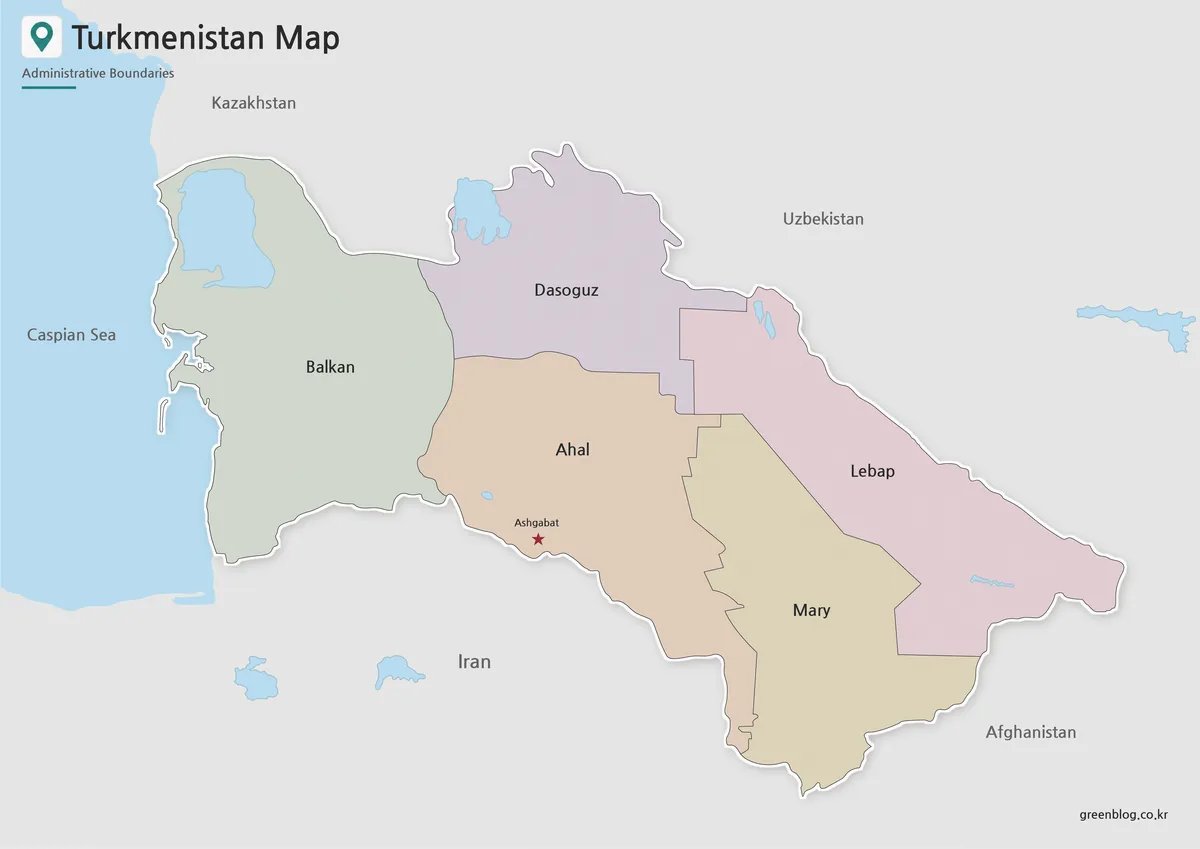
A Taoyuan City Map has to reconcile two very different spatial patterns: a tight group of northern and central districts and the long southeastern reach of Fuxing. Along the opposite side, the city opens to the Taiwan Strait through its coastal districts. The supplied portrait layout keeps all 13 district shapes visible while also placing New Taipei City, Hsinchu, Yilan, and the strait around the municipal boundary.
The set contains three matching administrative views: a pastel color map, a labeled black-and-white map, and an unlabeled district outline. Each published preview measures 1,200 × 1,115 pixels and uses the same boundary geometry. The protected download provides the map versions in JPG format and was prepared with A3 use in mind, while the supplied web previews are WebP images.
All 13 names appear on the two labeled versions: Taoyuan, Zhongli, Pingzhen, Bade, Luzhu, Guishan, Dayuan, Yangmei, Longtan, Guanyin, Xinwu, Daxi, and Fuxing. The artwork does not mark Taiwan Taoyuan International Airport, roads, rail lines, attractions, elevation, or population. It therefore serves as a district reference and annotation base rather than a transport, tourist, or physical map.
The composition is particularly helpful for explaining why district names cannot be arranged in a simple grid. Compact boundaries interlock around Taoyuan, Zhongli, Pingzhen, and Bade, whereas Fuxing extends far to the southeast and occupies the largest shape on the page. Teachers, presentation creators, and editors can choose the labeled or blank view according to whether names should be supplied or recalled.
Table of Contents
Printable Taoyuan City Map Overview
Taoyuan City lies in northwestern Taiwan. New Taipei City borders the municipality to the northeast and east, Hsinchu County lies to the southwest, Yilan County meets the southeastern side, and the Taiwan Strait defines the seaward edge. The labels in the artwork shorten Hsinchu County and Yilan County to “Hsinchu” and “Yilan,” so readers should understand them as surrounding administrative areas rather than city-center markers.
The municipal outline trends from the northwest coast toward the southeast. Dayuan, Guanyin, Xinwu, and Luzhu occupy the coastal side, although the blue water is most conspicuous beside the western districts in the color map. Inland, the smaller urban districts form a denser boundary pattern that requires more careful label placement.
Starting near the northeast, Guishan sits beside New Taipei City, with Taoyuan and Bade immediately to its southwest. Luzhu reaches the northern edge, while Dayuan lies west of it and Zhongli occupies a central position below the coastal pair. This Taoyuan City Map makes those close relationships clearer than a list of district names because each shared boundary remains visible.
Pingzhen lies below Zhongli, Yangmei and Xinwu extend across the west-central side, and Longtan leads toward the southern interior. Daxi forms the transition to Fuxing, whose large southeastern territory creates the long lower section of the municipal silhouette. The contrast between the clustered northwest and the elongated southeast is the main geographic reading task supported by these images.
Taiwan Taoyuan International Airport is located in Dayuan District, but no airport symbol or runway appears in the supplied artwork. A reader may use Dayuan’s position as general orientation only after consulting a separate current transport source. The same caution applies to highways, Airport MRT stations, railways, ports, and travel times, none of which can be inferred from these boundary maps.
Color Taoyuan City Map for Visual Comparison
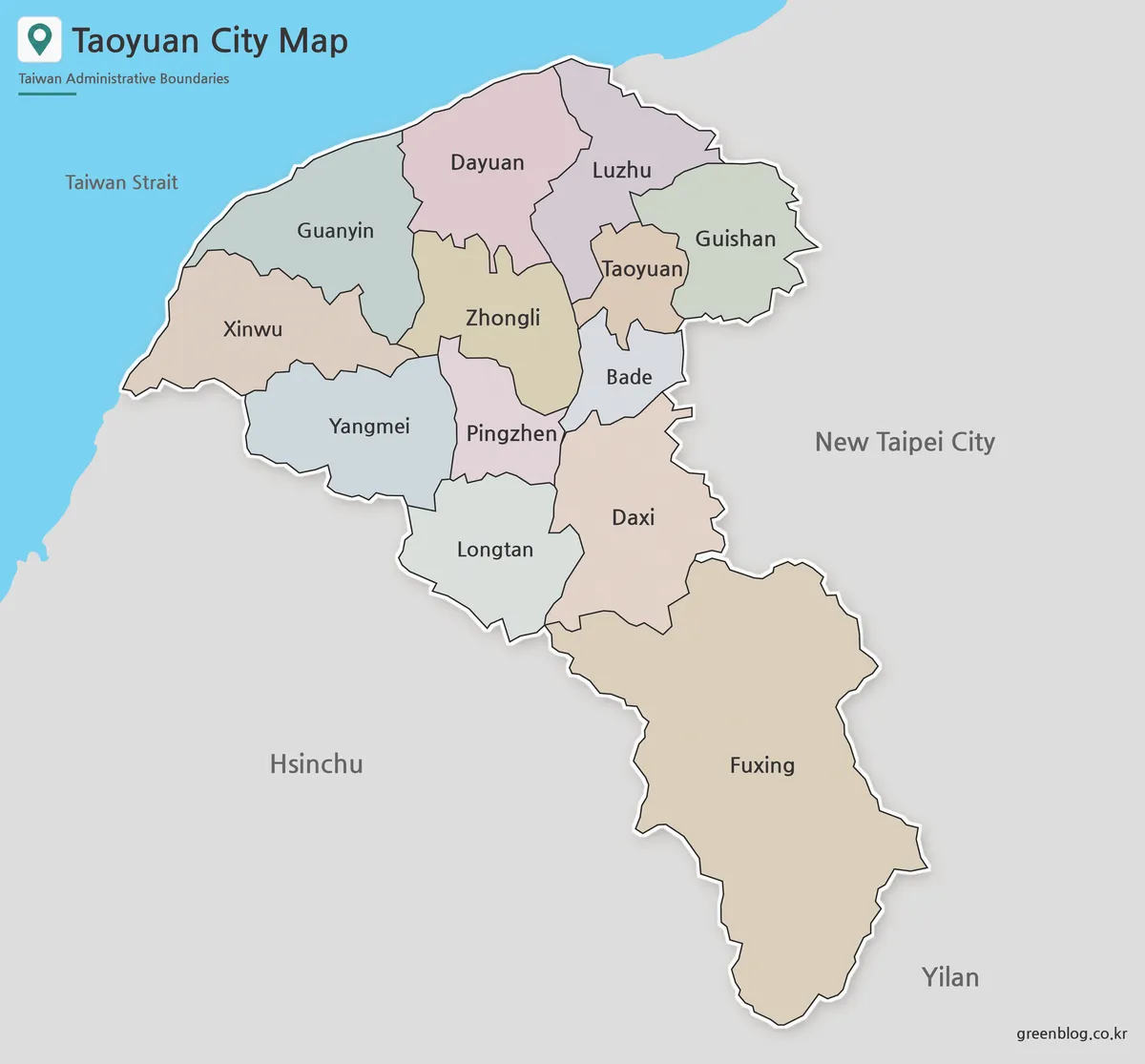
Pastel fills distinguish every neighboring district without assigning a statistical meaning to the colors. The technique is most valuable around Zhongli, Pingzhen, Taoyuan, and Bade, where several compact shapes meet within a small part of the image. Guishan and Luzhu also remain easy to separate along the New Taipei side.
The color Taoyuan City Map provides the fastest reference for a lesson answer key or introductory slide. Viewers can follow the coast from Xinwu through Guanyin and Dayuan, compare those shapes with inland Yangmei and Zhongli, and then trace the boundary chain through Daxi into Fuxing. Blue water identifies the Taiwan Strait, while the gray exterior keeps surrounding-area labels visually separate from the municipality.
Use the palette only as categorical separation. It does not represent land use, terrain, population, transit zones, electoral results, or development level. If a presentation adds any of those subjects, replace the original fills or add a clear legend so the new encoding cannot be mistaken for information already contained in the map.
Black and White Taoyuan City Map for Printing
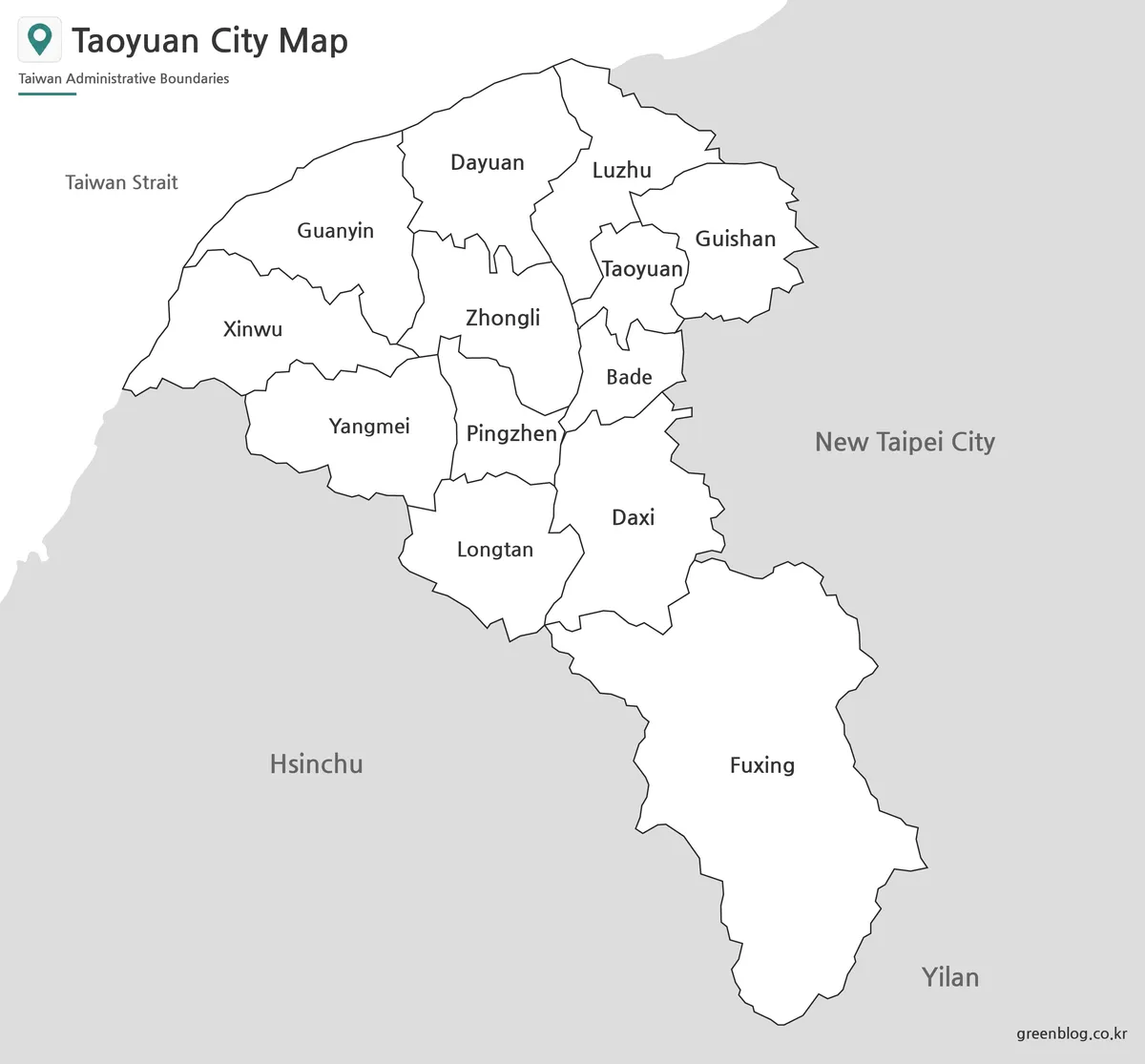
The black-and-white Taoyuan City Map removes the pastel fills but retains every district name, the exterior labels, and the coastline context. Thin internal lines are prominent enough to separate the districts without competing strongly with nearby document text. The result suits a guided worksheet in which students need to see the answers while adding notes or highlights.
Monochrome treatment also makes the difference in district scale more obvious. Fuxing dominates the lower portion through area alone, while Taoyuan, Bade, Pingzhen, and Luzhu depend on their labels and boundaries rather than color contrast. This makes the version appropriate for comparing geometry without suggesting that one district has a greater data value than another.
Print one test page before making a classroom set. Reduction can tighten the space around Taoyuan, Zhongli, Pingzhen, and Bade, while aggressive cropping may remove the Taiwan Strait or neighboring-area labels. Preserve the original 1,200 × 1,115 proportions to prevent the southeast–northwest shape from appearing compressed or stretched.
Blank Outline Map for Editing
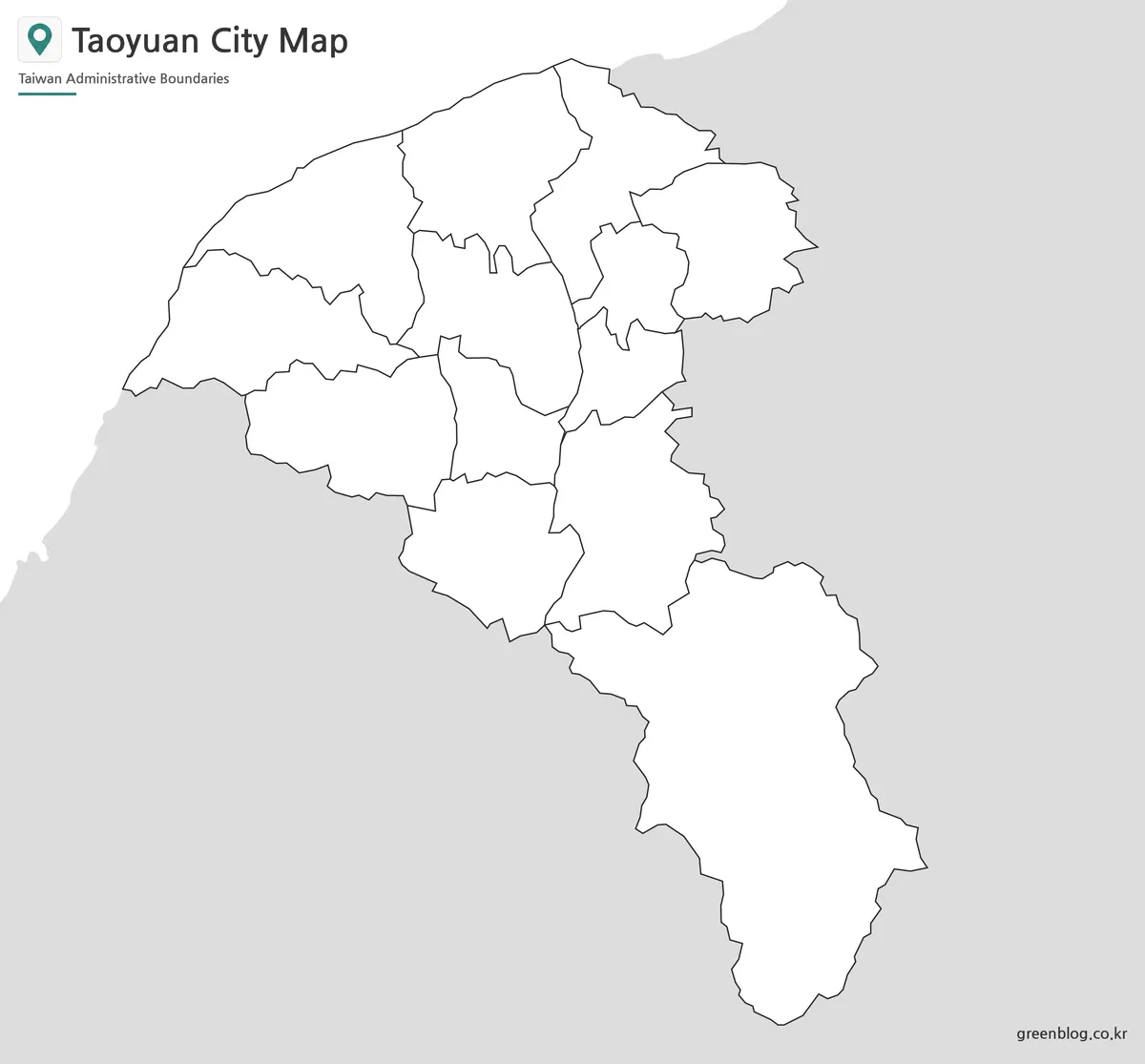
The outline keeps the municipal border and all 13 internal divisions while removing district names, surrounding-area text, the Taiwan Strait label, and regional color. The title and administrative-boundary subtitle remain at the top, so this is best described as an unlabeled district outline rather than a completely empty canvas. Its geometry matches the two reference versions.
A blank Taoyuan City Map supports tasks that would be too easy with labels present. Students can identify the four coastal districts, write the compact central names, distinguish Daxi from Longtan, or locate Fuxing by shape. A teacher can distribute the monochrome version as the answer key and the outline as the assessment page.
Designers may overlay a carefully sourced category, symbol set, or route, but the image itself is raster rather than an editable vector source. Add a legend for every new color and cite the source of any statistics. If accurate airport, rail, road, attraction, or elevation placement is required, obtain coordinates or a dedicated map instead of estimating positions from district boundaries.
Built for Classroom, Blog, and Presentation Use
A practical classroom sequence can move from recognition to recall. Begin with the color map to introduce the coast, surrounding counties and city, and the Fuxing extension; use the monochrome page for guided labeling; then remove all names with the outline. Learners can group the 13 districts by coastal position, central cluster, or southeastern transition without claiming those groups are formal administrative tiers.
For editorial work, the color map communicates district separation quickly, while monochrome fits beside dense text and the outline accepts a project-specific overlay. A Taoyuan City Map is also useful when a Taiwan overview needs to explain that the municipality contains far more than the Taoyuan urban core. The full boundary reaches the Taiwan Strait and continues southeast through Daxi into the much larger Fuxing District.
Choose the version by the reader’s task rather than by decoration. Keep labels for direct reference, remove color for restrained documents, or remove names for assessment and customization. For any real journey, current infrastructure, or street-level decision, pair the selected administrative image with an authoritative transport or local map.
Frequently Asked Questions
What is included in this Printable Taoyuan City Map collection?
The collection includes a color district map, a black and white map, and a blank outline map of Taoyuan City.
Is this map suitable for A3 printing?
Yes. The map was prepared with A3-size printing in mind, so it works well for larger handouts, classroom materials, and presentation boards.
What file format is included?
The map files are provided in JPG format.
Is the outline version editable?
Yes. The outline version is useful for adding colors, labels, markers, routes, data points, or custom annotations in graphic editing projects.
What can the Taoyuan City map be used for?
It can be used for classroom handouts, Taiwan travel materials, blog graphics, presentation slides, regional comparison projects, and infographic design.
Map File Information
The protected package contains three matching district views for reference, monochrome printing, labeling practice, and custom annotation.
- Included Versions: Color map · Black and white map · Outline map
- File Type: JPG map files
Related Maps
Additional Resources
- Taoyuan Tourism Travel Guide — The official city tourism guide explains Taoyuan’s northwestern setting, landform context, transportation, and visitor information beyond the administrative boundaries shown here.
Green Map creates custom-edited map images using open geographic data sources such as geoBoundaries, Natural Earth, OpenStreetMap, and government open data.
These maps are edited visual materials, not raw data files, and are provided for education, documents, presentations, and graphic reference.